In a Nutshell...
Loop marketing works better than funnels in Asia because buying decisions are driven by trust, referrals, and ongoing conversations, not linear journeys. Messaging platforms like WhatsApp and WeChat accelerate this by enabling content, recommendations, and discussions to circulate within networks, turning customers into active distribution channels.
In this guide you will learn:
- What is Loop Marketing?
- How is loop marketing different from funnel marketing?
- Why do funnels break down in Asia?
- Why is trust and community more important than conversion?
- How do messaging apps like WhatsApp and WeChat create growth loops?
- How does loop marketing work in practice?
- How should CRM and marketing strategies change for Asia?
- Why Marketing in Asia is Moving Beyond Funnels
- Frequently Asked Questions on Loop Marketing in Asia
What is loop marketing?
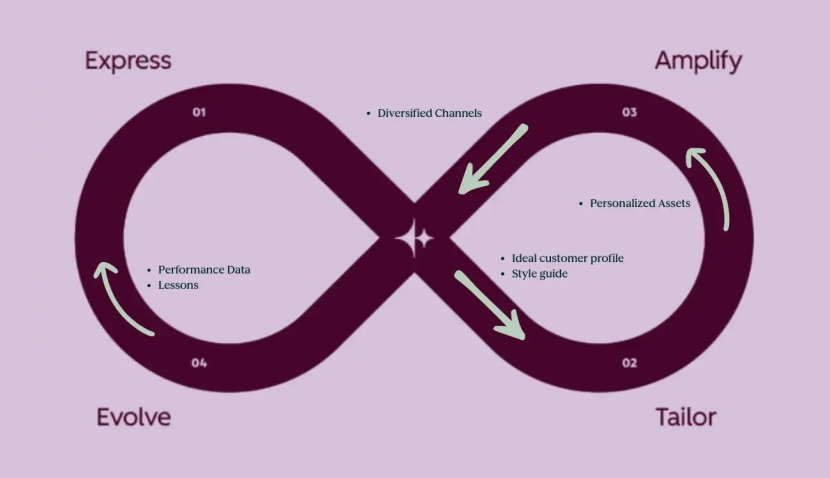
Loop marketing is a 4-stage framework designed by HubSpot that focuses on a four-stage, AI-driven process (Express, Tailor, Amplify, Evolve). It builds on the concept of the flywheel and focuses on continuous, compounding growth through customer engagement and advocacy.
How is loop marketing different from funnel marketing?
Unlike traditional funnel marketing, which assumes a linear journey, loop marketing reflects how customers actually behave. Growth happens when customers re-enter the journey through referrals, repeat engagement, and shared experiences.
While flywheel models focus on momentum generated by satisfied customers, loop marketing makes this process more explicit by treating every customer interaction as a potential entry point for new growth.
Here is a summary on the key differences between Funnel, Loop and Flywheel marketing:
|
Funnel Marketing |
Loop Marketing |
Flywheel Marketing |
|
Linear journey |
Continuous cycle |
Circular momentum model |
|
Focus on conversion |
Focus on relationships and advocacy |
Focus on momentum and customer satisfaction |
|
End point is purchase |
Purchase triggers new growth |
Customer experience drives growth |
|
Brand-driven |
Community-driven |
Customer-driven |
Why this matters in Asia:
-
Buying journeys are rarely linear
-
Customers rely heavily on peer validation
- Conversations extend beyond brand-owned channels
Why do funnels break down in Asia?
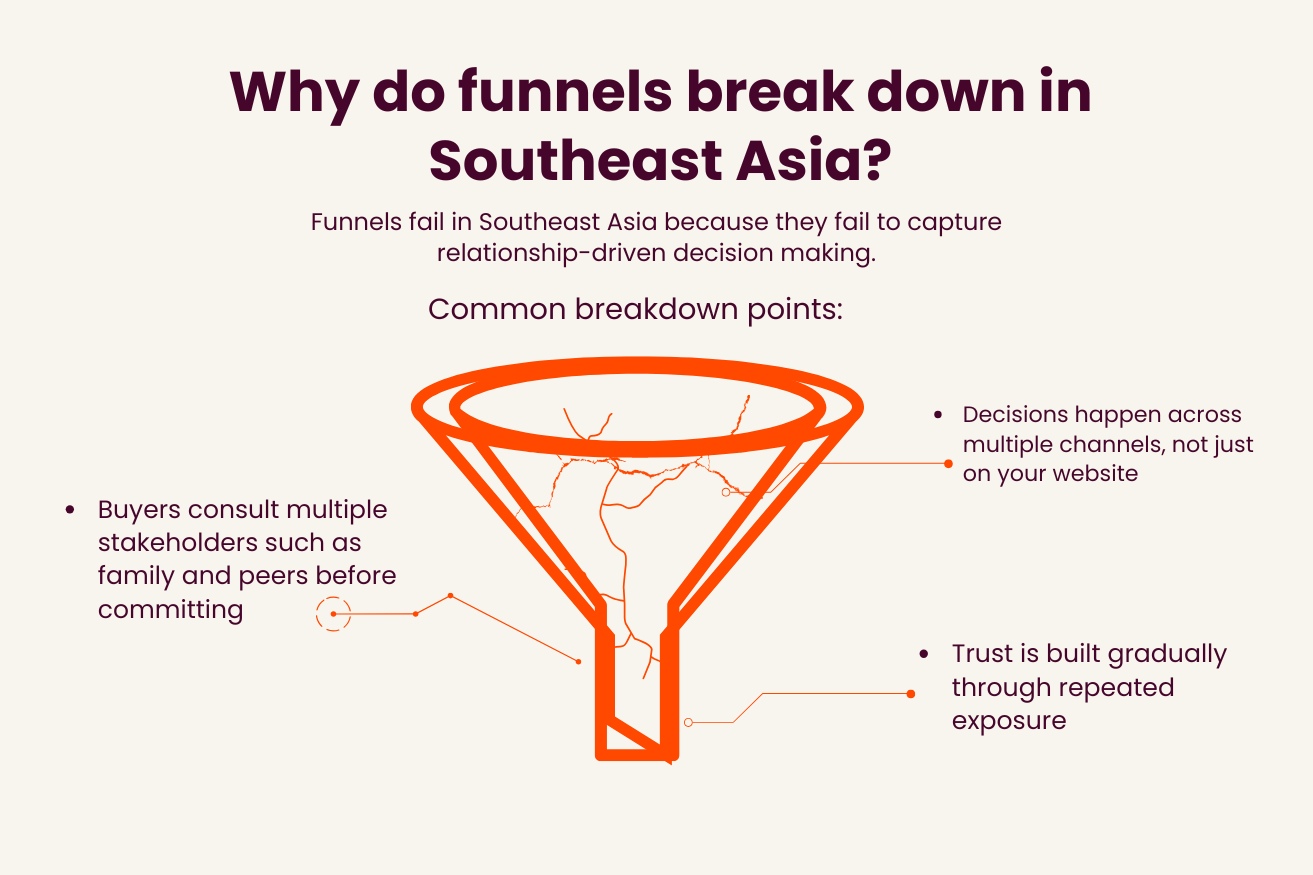
Funnels fail in Asia because they fail to capture relationship-driven decision making.
Traditional funnel models assume that buyers move step by step from awareness to conversion. In reality, markets like Singapore, Indonesia, and Malaysia involve multiple stakeholders and informal validation loops.
Insight: Funnels optimise for conversion efficiency, but overlook how trust is actually built.
→ Learn more on how NetFarmer helps your business grow with HubSpot
Why is trust and community more important than conversion?
In Asia, trust is the primary driver of conversion, not marketing messaging. According to Nielsen’s “Trust in Advertising” global report (2021), 88% of consumers trust recommendations from people they know, which is the highest compared to all other formats.
Cultural and behavioural patterns reinforce this:
- Strong reliance on word-of-mouth recommendations
- Preference for peer validation over brand claims
- High engagement in community groups and networks
What this means for marketers:
- A single touchpoint rarely converts
- Repeated exposure through trusted sources is critical
- Community endorsement amplifies credibility
Case examples on how trust and community play out in the real-world:
- Prospects forward case studies to colleagues before replying
- Decisions are discussed in private group chats
- Referrals often bypass traditional marketing channels entirely
Insight: Conversion is a byproduct of trust, not the starting point.
How do messaging apps like WhatsApp and WeChat create growth loops?
Messaging platforms act as natural loop accelerators by enabling fast, trust-based information sharing.
Dark social sharing reaches 87% in the region according to WARC's 2021 research on private channels. This makes messaging apps such as WhatsApp, Telegram, LINE, and WeChat an important part of the buyer journey, even when those interactions are invisible to standard attribution tools. Furthermore, WhatsApp ranks #1 in total user time and #2 in self-declared use in Singapore (Global Digital Report 2025) signalling how deeply they are embedded in daily use.
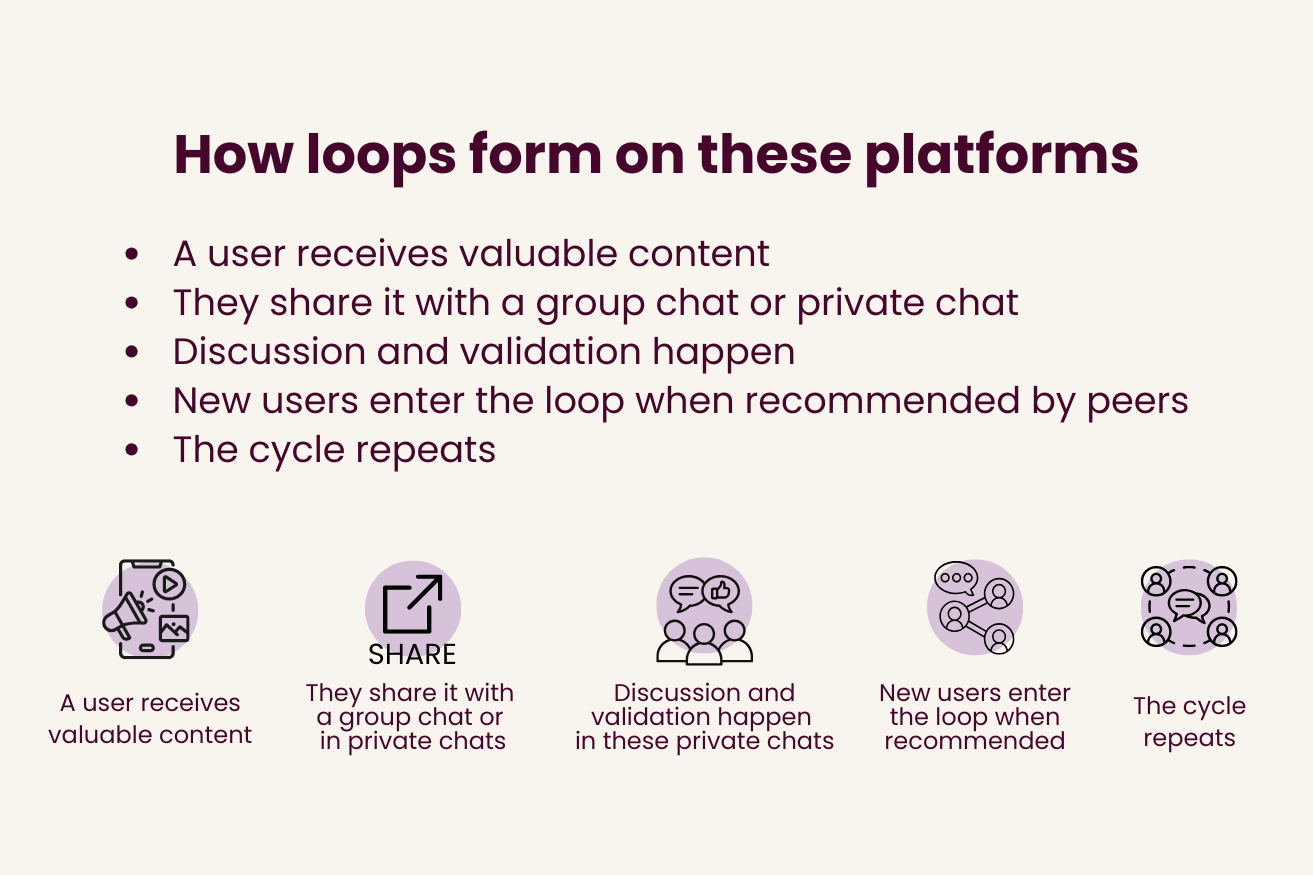
How loops form on these platforms:
- A user receives valuable content
- They share it with a group chat or private chat
- Discussion and validation happen
- New users enter the loop when recommended by peers
- The cycle repeats
Why this is powerful:
Conversations in messaging platforms are ongoing and contextual, so decisions form gradually rather than from a single touchpoint. Content spreads quickly because sharing is instant and requires almost no effort. Most importantly, trust comes through the person sharing it, which makes the message feel more credible than anything a brand says directly.
For example: a marketing manager in Indonesia shares a CRM case study in a WhatsApp group.
- The group discusses its relevance
- Two members explore the brand
- One becomes a customer
- That customer later shares their experience
Insight: In Asia, a significant portion of demand exists in a “dark social loop”, conversations your CRM never sees but shapes most purchase intent.
How does loop marketing work in practice?
Loop marketing integrates acquisition, engagement, and referral into a continuous cycle rather than treating them as separate stages.
Express → Tailor → Amplify → Evolve
Key components:
- Express: Clearly define your brand identity according to your Ideal Customer Profile
- Tailor: Shape interactions with the help of AI so they feel personalised, relevant, and aligned with each customer’s context.
- Amplify: Amplify your reach through distributing content across multiple channels, ensuring it reaches both human audiences and digital discovery systems.
- Evolve : Continuous improvement is key, as loop marketing is dynamic. AI enables faster testing, learning, and adaptation.
This contemporary marketing strategy reflects the reality of modern customer journeys, where multiple touch points and trust-building moments shape outcomes.
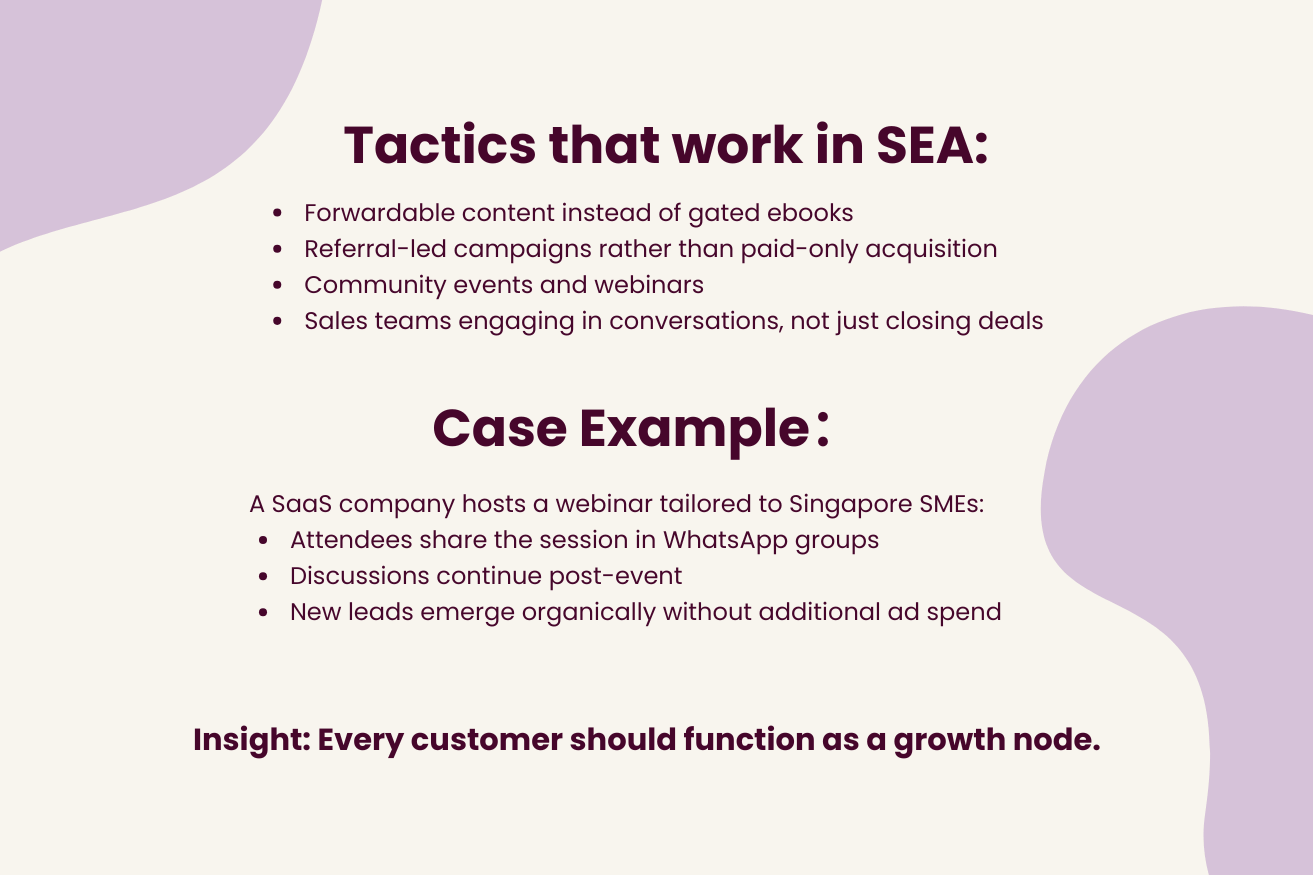
Tactics that work in SEA:
- Forward-able content instead of gated ebooks
- Referral-led campaigns rather than paid-only acquisition
- Community events and webinars
- Sales teams engaging in conversations, not just closing deals
For example: A SaaS company hosts a webinar tailored to Singapore SMEs:
- Attendees share the session in WhatsApp groups
- Discussions continue post-event
- New leads emerge organically without additional ad spend
Insight: Every customer should function as a growth node.
How should CRM and marketing strategies change for Asia?
To support loop marketing, businesses must shift from pipeline management to relationship management.
What to track in your CRM:
- Referral sources (Referred, Shared, Organic etc.)
- Conversation history across channels
- Engagement beyond forms and email
What to prioritise in marketing:
- Shareability over conversion optimisation
- Continuous engagement over one-off campaigns
- Multi-channel conversations over single-channel funnels
Practical changes:
- Design workflows around conversations, not lifecycle stages
- Unify marketing, sales, and customer data
- Align customer success around retention and advocacy
%20%E5%89%AF%E6%9C%AC%20(1).png?width=1313&height=875&name=Blog%201516%20Graphics%20(420%20x%20280%20px)%20%E5%89%AF%E6%9C%AC%20(1).png)
A common mistake that many SMEs in Singapore make is deploying loop tactics without a loop-ready system.
Common gaps:
- Running referral campaigns without CRM-level referral tracking
- Using WhatsApp for lead nurturing without logging conversations
- Measuring lead conversions but ignoring referral influence
→ You create loop behaviour, but not loop visibility. This leads to incomplete customer data and missed insights that prove valuable for loop marketing and growth.
Insight: The CRM should reflect how relationships actually develop, not how funnels are designed.
Why Marketing in Asia is Moving Beyond Funnels
Funnels still have a place, but they no longer reflect how growth really happens in Asia. Decisions are shaped by trust, peer validation, and ongoing conversations rather than a straight line from awareness to purchase.
Loop marketing fits this reality better. It treats every customer interaction as part of a wider cycle, where engagement, referrals, and repeat conversations continuously feed new growth. Most teams are still set up to track journeys, not relationships. That gap is where opportunities are lost.
A platform like HubSpot helps close it by connecting campaigns, customer data, and engagement in one system. It gives teams a clearer view of how conversations and conversions actually happen, not just how they were planned.
Learn how NetFarmer turns conversations into growth using HubSpot.
If growth in Asia is becoming more networked and conversational, your marketing system needs to reflect that shift. We help businesses use HubSpot to expand across Singapore, China, and Asia Pacific by unifying customer data, automating customer journeys, and aligning marketing, sales, and service operations.
Frequently Asked Questions: Loop Marketing in Asia
What is loop marketing in simple terms?
Loop marketing is a strategy where customers continuously drive new growth through referrals, sharing, and repeat engagement.
Why are funnels less effective in Asia?
Funnels do not account for trust-based, multi-touch decision making that happens across peer networks and messaging platforms.
How do messaging apps influence buying decisions?
Apps like WhatsApp and WeChat enable private discussions, peer validation, and rapid content sharing, all of which accelerate trust and influence decisions.
What type of content works best for loop marketing?
- Short, shareable insights
- Case studies with clear outcomes
- Local or region-specific examples
- Content that sparks discussion
How can companies start implementing loop marketing?
- Create content designed to be shared
- Encourage referrals and community engagement
- Track conversations, not just conversions
- Align teams around long-term relationships
%20(2).png)