.png)
China is home to one of the world’s largest digital markets, but reaching Chinese audiences requires more than the usual social media offerings of Meta (Facebook & Instagram), YouTube or TikTok.
A very big part of it here is the Chinese firewall blockade. China’s ban on foreign social media makes it hard for their citizens to access foreign sites. There is a whole region of potential audience that you can unlock, once you get your message across to the right people, with the right tools.
Here’s how we can reach them in this article.
Why platform choice matters in China
Entering China’s digital market can feel overwhelming at first. There are multiple major platforms, different content formats and separate expectations around communication, trust and customer service.
You don't need to be on every platform right off the bat. More importantly, we should start off by understanding what each platform does best. Chinese social media platforms are highly specialised. A person may use one platform to find product recommendations, another to watch short videos, and another to communicate with a brand after making a purchase.
That also means simply translating your existing marketing materials does not work across the market. Your content needs to reflect the trends, and purpose of each platform; and the mindset of the people using it.
A useful way to think about Chinese social media is:
- Douyin creates attention.
- Xiaohongshu builds trust.
- WeChat develops relationships.
- Zhihu demonstrates expertise.
- Weibo amplifies public conversations.
Likewise for Chinese social media, you don’t need to be on every single platform immediately. Identify your business goals, your brand voice to choose the right platform for your brand
Reach Chinese-Speaking Audiences More Effectively
Ready to build a stronger presence in Mainland China? Our Chinese social media marketing services help your brand choose the right platforms, create localised content and turn audience engagement into meaningful business opportunities.
Core WeChat Marketing Tools for SMEs in Asia
1. WeChat/WeCom (微信/企业微信)
WeChat is the top messaging app in China, but its ecosystem includes official accounts, mini programs, private and group chats, payments and enterprise tools such as WeCom which is WeChat for business (企业微信).
This makes it particularly useful for businesses that need to maintain ongoing relationships with customers, distributors, members, clients or prospects. Unlike a purely reach-based channel, WeChat can help a brand create an owned communication environment where customers receive updates, ask questions, access services and return for repeat purchases.
Two types of Wechat Official Accounts
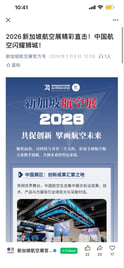
- Subscription Account
Appears in Subscriptions feed, for brands to post content
Brands can use them to establish presence in Chinese Social media by publishing long form educational posts to establish authority. Publish Wechat videos to attract the right audience to your brand.
- Service account

Appears in the main chat list (like a message)
Answer customers' queries and interact directly with them. Useful for maintaining direct communication with people who have already shown interest in your business.
2. Douyin (抖音)
Douyin is primarily a short-video and livestreaming platform. Its strength is algorithmic discovery: content can reach users who do not already follow a brand.
For marketers, Douyin is useful for:
- Increasing brand awareness.
- Demonstrating products visually.
- Promoting launches, events and campaigns.
- Working with creators or key opinion leaders.
- Supporting livestream commerce.
Douyin is generally strongest at the top of the funnel. It can generate attention and interest, but brands need a clear next step if they want to convert that attention into enquiries or long-term relationships.
A brand might direct interested users towards:
- A WeChat official account.
- A landing page.
- A registration form.
- A product page
3. Xiaohongshu (小红书)
Xiaohongshu, also known as Red Note, combines social content, product discovery, lifestyle recommendations and search behaviour. Users often browse the platform when researching what to buy, where to go or which brand to consider.
The platform is useful for brands that depend on:
- Search-driven product discovery.
- Reviews and recommendations.
- Visual presentation.
- Consumer education.
- User-generated content.
- Creator or KOC collaboration.
For SMEs in Asia, localisation is important. Content should reflect Chinese audiences interests, shopping habits, service expectations, cultural preferences and regional use cases.
4. Zhihu (知乎)
Zhihu is a question-and-answer platform associated with professional knowledge, detailed explanations and expert discussion. It can be useful for brands that need to establish credibility before a customer makes a complex decision.
Zhihu may be suitable for:
- B2B companies.
- Professional services.
- High-consideration products.
- Brands targeting technically informed audiences.
Marketers can use Zhihu by answering relevant questions rather than publishing only promotional content. Strong contributions should explain the issue clearly, acknowledge trade-offs and provide useful context. Zhihu content can be repurposed into WeChat articles, website resources, social content ideas, FAQs and more.
5. Weibo (微博)
Weibo is a public-facing social platform that supports news, announcements, trending topics, entertainment, events and brand conversations. It is useful when a business wants to participate in a wider public discussion rather than communicate only with an existing community.
Marketers can use Weibo for:
- Brand announcements.
- Public relations.
- Event promotion.
- Campaign hashtags.
- Media and influencer engagement.
Weibo can create visibility quickly, but public exposure also requires active monitoring. Posts can attract comments, criticism or questions that need timely responses.
5 Platforms At A Glance
|
Platform |
Main role |
Suitable marketing activities |
|
Douyin |
Attention and discovery |
Short videos, livestreams, creator partnerships, product demonstrations |
|
Xiaohongshu |
Trust and consideration |
Reviews, lifestyle content, search-friendly posts, KOC campaigns |
|
|
Relationships and retention |
Official accounts, customer service, CRM, groups, loyalty, mini programs |
|
Zhihu |
Expertise and credibility |
Detailed answers, professional education, technical content |
|
|
Public reach and conversation |
Announcements, PR, trends, hashtags, events and crisis communication |
Conclusion
Chinese social media platforms should be selected according to the role they play in the customer journey. Douyin is designed to create attention, Xiaohongshu helps build trust, Zhihu supports expertise, Weibo expands public conversations and WeChat develops long-term relationships.
For SMEs in Asia, WeChat is often most valuable when it connects these activities to a practical business process—such as enquiries, bookings, customer service, CRM, loyalty or repeat purchases. The strongest strategy is not to be present everywhere, but to use each platform for a clear purpose and guide relevant audiences towards the next stage of the relationship.
%20(1).png)
%20(2).png)