
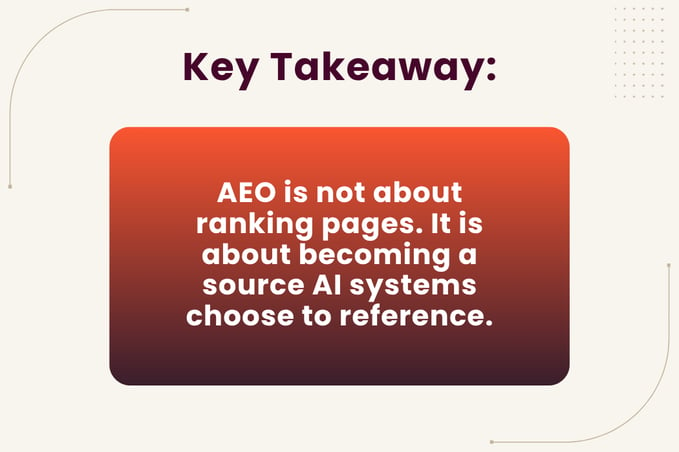
Most teams think AEO is just “SEO for ChatGPT”. It is not. Answer Engine Optimisation is about becoming the source AI systems trust enough to quote, not just a page they rank.
What is AEO?
AEO (Answer Engine Optimisation)is the practice of structuring and writing content so answer engines like ChatGPT, Gemini, and Perplexity can understand it, extract it, and cite it in generated responses. Unlike traditional SEO, which focuses on clicks, AEO focuses on clarity, authority, and reuse across contexts.
This guide walks through a practical framework built on five levers: structure, clarity, formatting, authority, and measurement.
Why Does AEO Matter?
AEO matters because search behaviour and discovery is shifting from search results to generated answers.
Tools like ChatGPT and Perplexity increasingly summarise multiple sources into a single response. When your content is cited, you gain visibility without needing the click first. That changes how influence happens in the buyer journey.
That does not mean traffic disappears, but the traffic is more directed at niche requests, meaning influence starts earlier and happens in more places.
How does AEO Content Differ From Traditional SEO Content?
The shift from SEO to AEO is not cosmetic. It changes how content is planned, written, and evaluated.
A practical example: a typical SEO blog might open with a long introduction to “hook the reader”. An AEO-optimised post answers the question in the first two sentences, because that is the part most likely to be extracted.
Content Ideation: Start With the Questions Your Audience Actually Asks
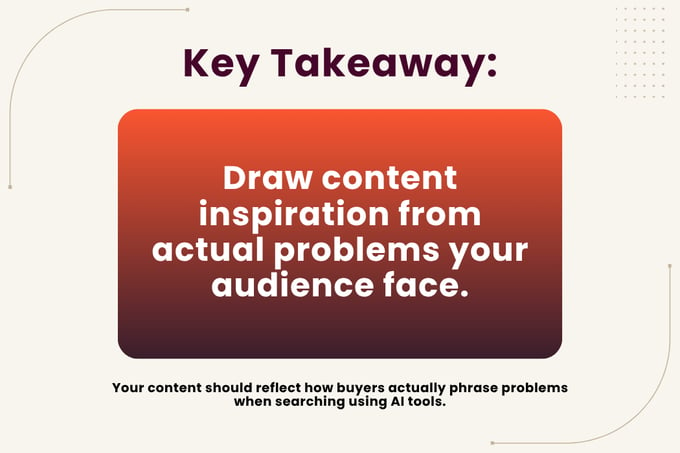
Strong AEO content begins with real questions, not keyword variants.
In B2B SaaS work with HubSpot CRM teams, the most useful prompts tend to sound like this:
- What is AEO and how is it different from SEO?
- How do I optimise a blog post for AI search?
- Which HubSpot content types drive the pipeline, not just traffic?
- How should I structure comparison content for enterprise buyers?
These are not just awareness queries. They map directly to buying intent.
A simple way to structure this:
- Awareness: “What is AEO?”
- Consideration: “AEO vs SEO: which should we prioritise?”
- Evaluation: “Which tools or platforms support AEO best?”
- Decision: “How do we implement AEO within HubSpot?”
If your content does not reflect how buyers actually phrase problems, it will struggle to appear in AI-generated answers.
Structure Content So Answer Engines Can Parse It Easily
Answer engines prefer predictable, well-organised content.
**Information sourced from HubSpot Knowledge Base for AI optimisation.
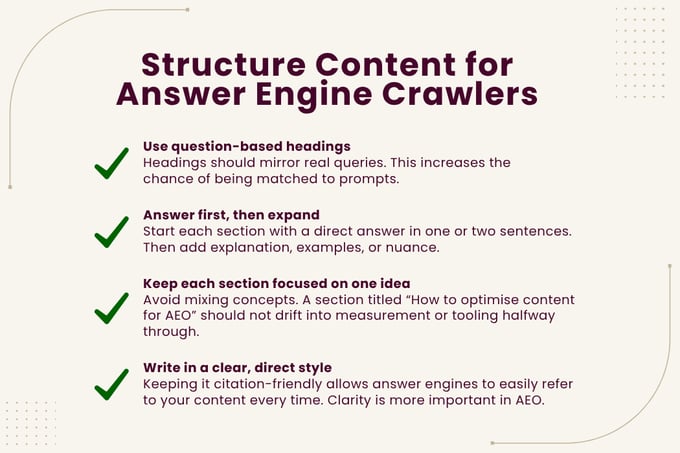
→ Use question-based headings
Headings should mirror real queries. This increases the chance of being matched to prompts.
→ Put the answer first, then expand
Start each section with a direct answer in one or two sentences. Then add explanation, examples, or nuance.
→ Keep each section focused on one idea
Avoid mixing concepts. A section titled “How to optimise content for AEO” should not drift into measurement or tooling halfway through.
→ Write in a Clear, Direct, Citation-Friendly Style
Clarity beats cleverness every time.
AI systems extract content that is easy to interpret without ambiguity. That means:
- Short, direct sentences
- Defined terms before deeper explanation
- Consistent terminology across the page
In practice, this often means cutting 20 to 30 percent of what you initially write.
Clarity is Important for Both Readers and AI
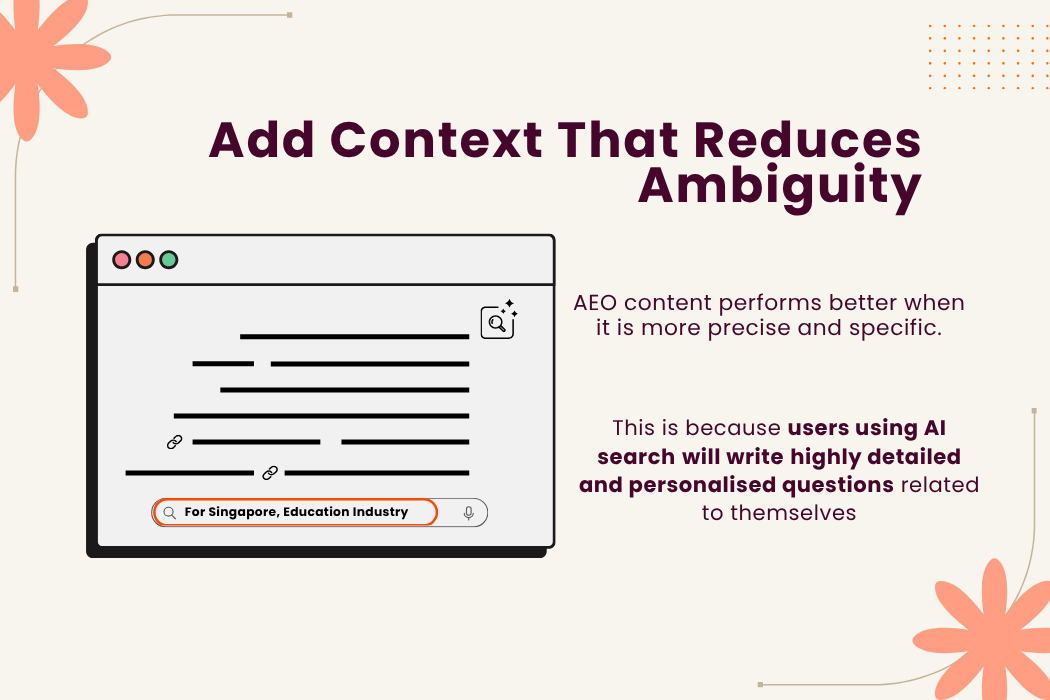
→ Add Context That Reduces Ambiguity
AEO content performs better when it is precise about when advice applies and when it does not.
For example:
- If targeting enterprise buyers, include implementation complexity and integration constraints
- If discussing tools, define evaluation criteria such as cost, scalability, and onboarding time
- If advice varies by industry and region, state that clearly
This reduces the risk of your content being misinterpreted or ignored by answer engines.
Use Formats which AI Can Reuse Easily
Some formats are easier for AI systems to extract and reuse.
- Numbered lists for processes and frameworks
- Bullet lists for options or summaries
- Tables for comparisons and trade-offs
- Short definition blocks for featured snippets
Example: AEO optimisation checklist
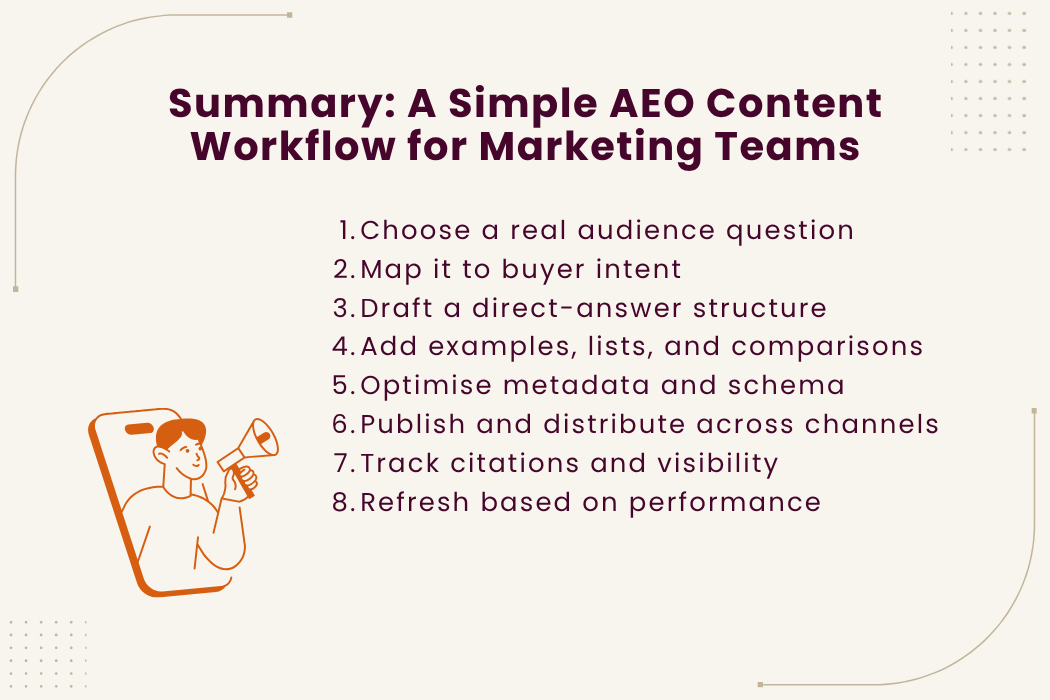
1. Identify the core question
2. Write a two-sentence direct answer
3. Structure headings around sub-questions
4. Add lists, examples, and comparisons
5. Ensure consistent terminology
6. Add schema markup where relevant
7. Review readability and clarity
Visuals still matter, but they should support the text, not replace it. Always include descriptive alt text.
Build Topical Authority beyond your website
Authority is what makes the content worth trusting in the first place.
In SEO, that usually means showing real experience, citing credible sources, and covering the topic with enough depth that the page feels genuinely useful rather than opportunistic. In AEO, authority matters even more because answer engines tend to favour content that looks precise, consistent, and reliable.
-
Show first-hand experience or real-world examples instead of generic definitions.
-
Cite credible sources and industry standards where relevant to reinforce credibility when making factual claims or using statistics.
-
Keep the content across all your social media pages updated to reflect current search and AI behaviour.
-
Be active in community threads such as Reddit or Quora, and give practical, personal advice.
-
Build trust by acknowledging limitations or complexity where appropriate, rather than oversimplifying.
-
Link related pages together strongly through internal links to show how the topic is interconnected.
How to Measure AEO Performance
AEO measurement is still evolving, but a few indicators are useful:
- Prompt coverage: how often your brand appears in relevant queries
- Brand visibility: mentions across AI tools
- Owned-domain citation rate: how often your site is referenced
- Citation share by content type: blog, documentation, case studies
- Conversion impact: leads influenced by AEO-optimised content
Tracking tools like Peec AI, HubSpot’s AEO tool, Profound AI, and Chatbeat are emerging to monitor AI search and AEO trends, though most teams still rely on manual prompt testing and CRM attribution.
Explore how HubSpot’s AEO tools help you measure citations, track prompt coverage, and turn AI visibility into qualified demands.
Final Thoughts:
AEO is becoming a practical discipline, not an experiment.
The teams that win will not be the ones producing the most content. They will be the ones producing the clearest, most useful, and most consistent content across every channel that matters.
The goal is simple to state but hard to execute: become the source that gets cited.
.png)