.png)
GTM (Go-to Market) has evolved in 2026. Generating more leads is a fickle goal that does not hold up in the complex media space today. With leads coming in from multiple touch points, it is important to predict and discern leads that become revenue. With recent research from Responsive showing that buyers complete 90 percent of their research before contact, teams need systems capable of forecasting outcomes rather than just tracking activity.
HubSpot's Breeze AI suite addresses this challenge directly. It transforms a standard CRM into a revenue prediction machine that automates 30% more meetings and qualifies visitors autonomously through AI integration. This opens up the pool of potential leads and helps to scale efficiency of the GTM engine.
Table of Contents
- The Revenue Engine Gap in Modern GTM
- What Is HubSpot Breeze AI?
- How Does Breeze AI Map to the GTM Funnel?
- Steps for Real-World Implementation
- Why Timing Matters for AI in GTM
- Next Steps
The Revenue Engine Gap in Modern GTM
Traditional GTM stacks often suffer from siloed data and reactive processes. Sales teams pursue unqualified leads and marketing builds funnels without forward-looking signals. The result? Teams waste 20 to 30 percent of time on low-intent prospects.
Consider a typical mid-market SaaS team pulling in around 500 leads each month, yet only converting 5 per cent. It is easy to assume the answer is more leads.
Often, it is not.
The issue usually sits in how those leads are prioritised. Manual scoring leans on the obvious and misses the quieter signals that actually point to intent, causing these groups of leads with buyer potential to be missed out.
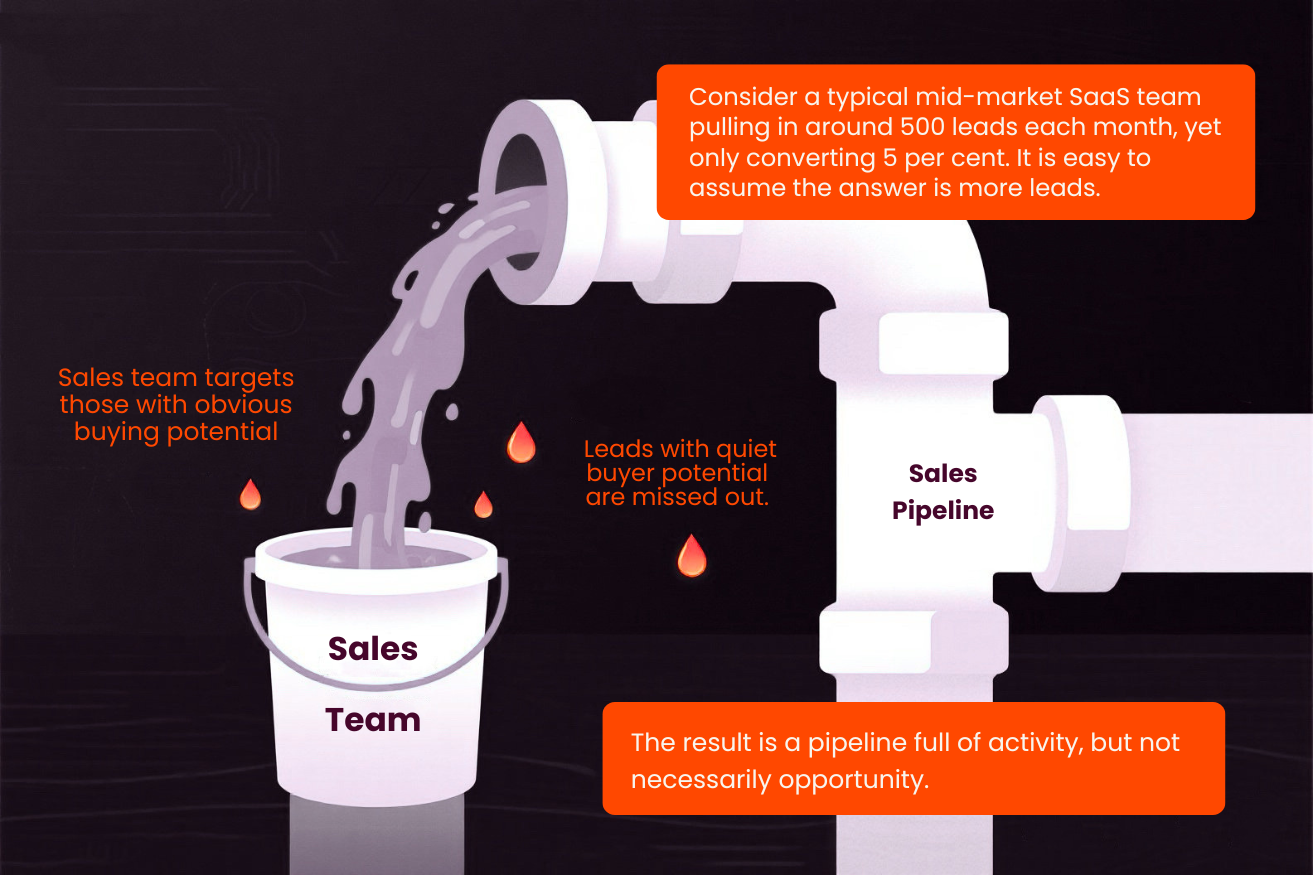
The result is a pipeline full of activity, but not necessarily opportunity.
AI changes that.
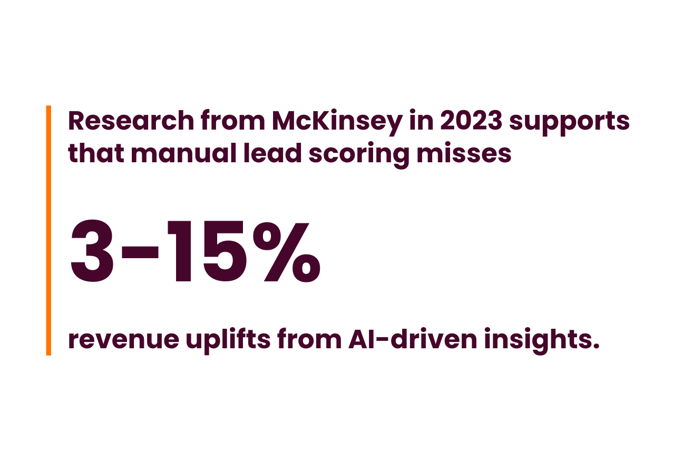
Research from McKinsey in 2023 supports that manual lead scoring misses 3-15% revenue uplifts from AI-driven insights.
With HubSpot's predictive insights, they use AI to analyse historical data and subtle patterns which prioritise leads with higher conversion likelihood. This shifts the emphasis from lead volume to predicted revenue value.
When you bring in AI to look at past deals and behaviours, a different picture emerges. Attention shifts towards leads that resemble real buyers, not just active ones, and that is where conversion starts to move.
What Is HubSpot Breeze AI?
HubSpot Breeze AI, introduced in 2024 and updated through 2026, forms the core of HubSpot's customer platform. It operates without requiring external integrations. The suite rests on three pillars, each designed to support revenue operations.
- Breeze Copilot: An AI assistant that handles real-time tasks. It summarises calls, personalises emails, and recommends next steps, saving sales teams hours each week.
- Breeze Agents: Autonomous tools for specific functions. Website agents qualify visitors around the clock. Prospecting agents schedule meetings from enriched contact profiles. Discovery agents accelerate deal closures.
- Breeze Intelligence: A predictive engine that scores leads, forecasts deals, and identifies buyer intent using data from over 200 million profiles.
Real-world results illustrate its impact.
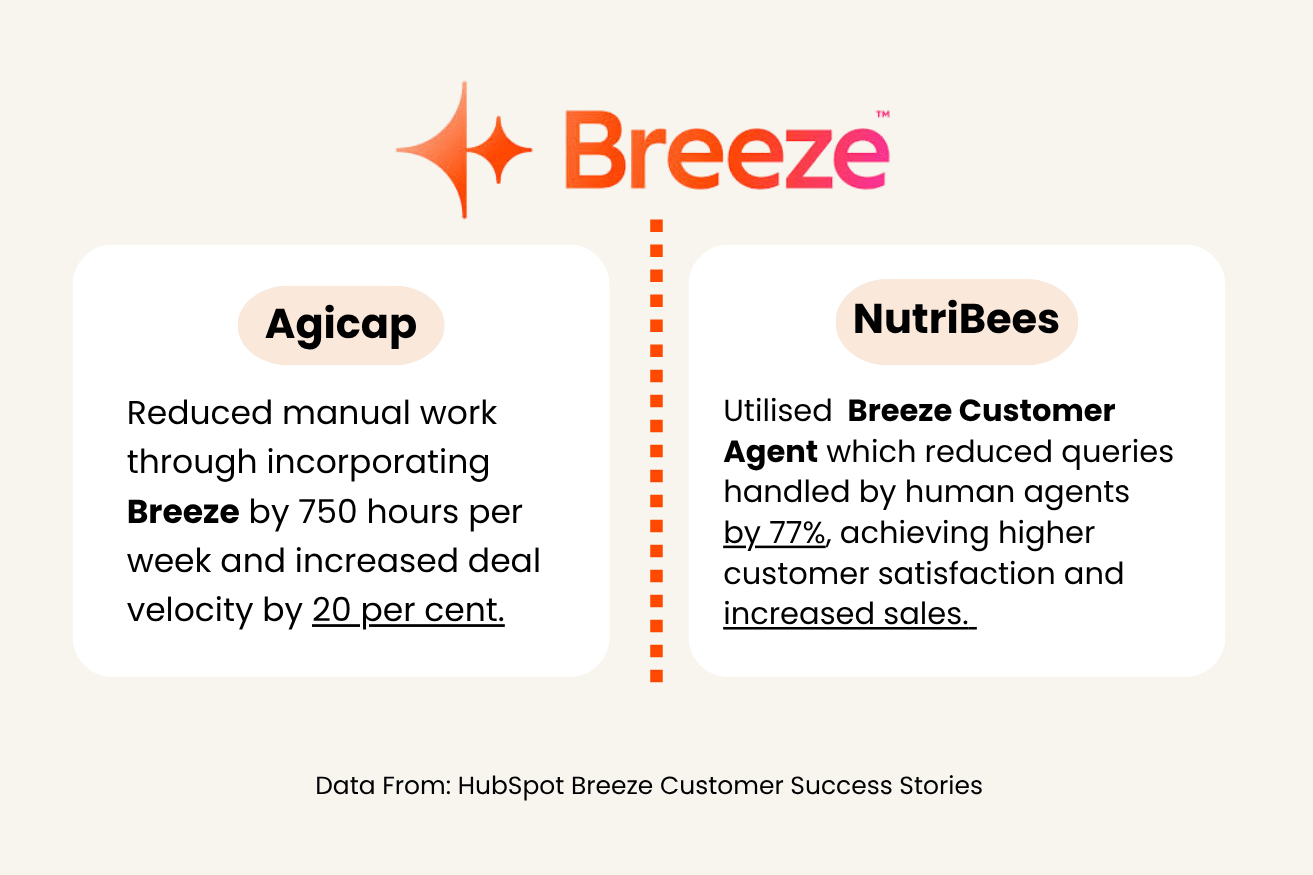
Agicap reduced manual work through incorporating Breeze by 750 hours per week and increased deal velocity by 20 per cent.
Nutribees utilised Breeze Customer Agent which reduced queries handled by human agents by 77%, achieving higher customer satisfaction and increased sales.
These components create what is known as a revenue intelligence framework: a unified system that connects data, automates tasks, and anticipates pipeline health.
Mapping AI to Your GTM Funnel for Predictable Growth
Breeze AI integrates seamlessly across the GTM funnel stages. I've seen teams double pipeline velocity by embedding AI natively. Here's how you do it.
The table below outlines key actions and their revenue effects.
|
Funnel Stage |
Breeze AI Action |
Revenue Impact |
|
Attract |
Content optimisation and AEO signals |
Doubles share of voice in AI search |
|
Convert |
Website Agent for instant qualification |
Transforms websites into revenue sources |
|
Nurture |
Predictive scoring and AI emails |
Lifts sales ROI by 10-20 per cent |
|
Close |
Prospecting and discovery agents |
Increases booked meetings by 30 per cent |
This setup creates a "revenue intelligence framework." It unifies data, automates workflows, and predicts pipeline health.
Implementation: From Setup to Scale in Days
Implementing Breeze AI requires no advanced technical expertise. Teams can activate and start using it in daily work with a few simple steps.
- Enable Breeze Copilot: Connect it to your CRM for immediate use in tasks like deal preparation and email drafting.
- Deploy Agents: Begin with website bots for lead qualification, then expand to prospecting for outbound efforts targeting ideal customer profiles.
- Activate Intelligence: Use it to enrich leads automatically and generate forecasts with 70-80 per cent accuracy.
- Measure Progress: Focus on metrics like monthly recurring revenue per engagement, moving beyond raw lead counts. HubSpot users with AI workflows report 96 per cent faster deal closures.
For Chinese businesses expanding globally, HubSpot performs reliably when paired with VPNs and content delivery networks. You can integrate WeChat and other Chinese social media platforms via partners like MsgBox, then funnel into Breeze for global prediction thereby creating value from conversations.
Why Now? The AI GTM Advantage
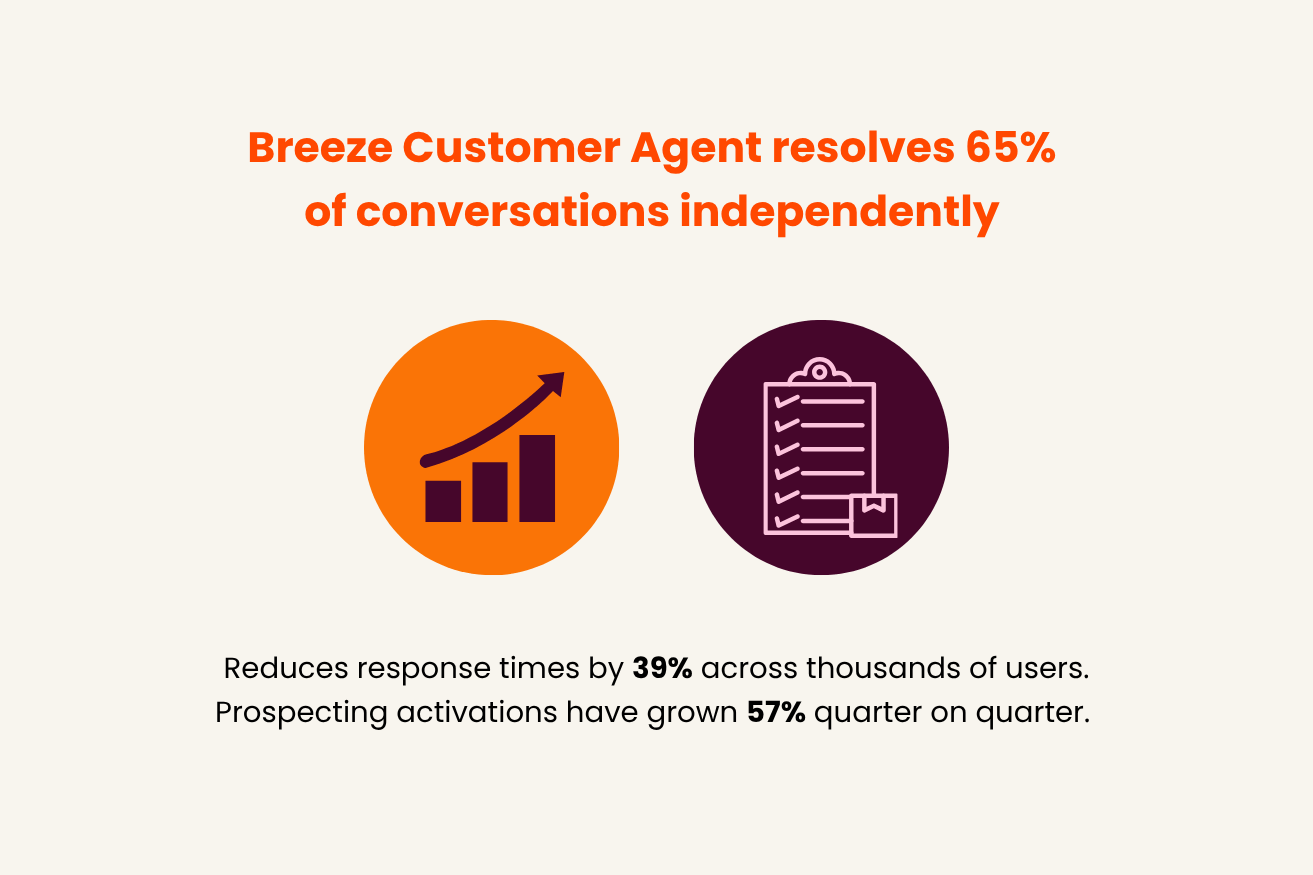
Adopting AI in GTM offers a clear competitive advantage. HubSpot’s latest reporting makes that clear. Breeze Customer Agent resolves 65 per cent of conversations independently and reduces response times by 39 per cent across thousands of users. Prospecting activations have grown 57 per cent quarter on quarter.
Early adopters are already compounding gains, building on unified data and connected processes. Those still operating on fragmented systems are not standing still, they are falling behind as AI becomes embedded in revenue operations.
Your Next Step: Build the Engine Today
The shift to AI-powered revenue engines is not about replacing existing processes. It is about enhancing them with prediction and automation. Begin by auditing your current stack. Ask a simple question: do you predict revenue or merely react to it?
HubSpot makes the first step accessible. Breeze Copilot integrates directly into your CRM and requires no additional cost to activate. Each addition compounds the value, turning fragmented workflows into a unified system. This transition to AI-powered revenue engines is underway across industries. The teams that begin now will shape how GTM evolves in the years ahead.
Your funnel can become intelligent. Activate before competitors do.